




 Get a Free Estimate from Local Trusted Experts!
Decking Out The Deck

Having a deck built onto a house is a major decision that any homeowner has to carefully consider before moving forward. Once they decide to have one added to their outdoor space, choices on how to use the new living area still have to be made.
From furniture to lighting, shade features to recreational spaces, all of these need to be decided on and set up before the space can be used for relaxation, the entertainment of family and friends at get-togethers, or as an extension of gardening space.
Before anything else, what the deck space will be used for needs to be considered. This will guide what furnishings and features are most needed and will best add to the comfort, function and livability of the deck.
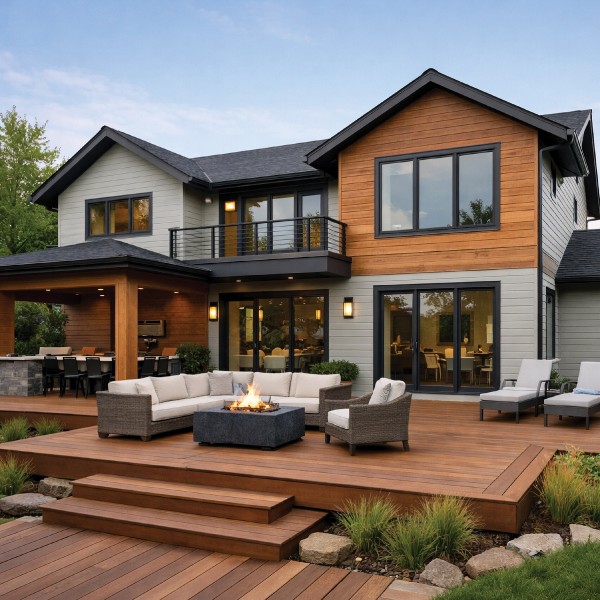 "I'm always looking to start with what's their why, and how are they trying to entertain, how they are trying to utilize it," says Paul Squierdo, landscape designer for Dutchies Stoneworks & Outdoor Living. "I usually start from there, rather than just what's the trend. ... I get them to try and focus on their family. ... So before I go into asking this thing or the other, I start there. I let the function drive the design."
Besides analyzing how to best utilize the space, before any major and permanent structures or large furniture, Squierdo also emphasizes that it is vital to consider how the outdoor arrangement could impact indoor living, such as obstructing the view to the outdoors or blocking out natural light from reaching the interior of the home, as the goal of creating a livable outdoor space also involves not impacting the livability of the rest of the house.
"Thinking of those things in terms of placement is also very key, that not everybody always thinks about at times. I start having that conversation, but if they say, 'Oh, that's gonna block the natural light,' then I'm like, 'Yeah, maybe this isn't the best spot,'" Squierdo says about how he approaches the topic with clients.
While ensuring they don't negatively impact how the indoors are used, lighting and shading are two of the most important features a deck can have, significantly influencing the ability of the homeowners themselves and their guests to use the deck for its intended purposes.
Ambient lighting is usually incorporated into the deck itself. LED lighting systems, which are low voltage, offer a soft glow so as to offer necessary visibility without being overly bright or blinding.
"Warm, white low-voltage lighting is the dominant choice because it feels high-end and inviting," says Robert Glasner of Deck Craft Plus.
Glasner also emphasizes that lighting projects are one of the highest return on investment upgrades a deck can receive.
The lighting is usually placed throughout the deck, especially on railings and stairs where the ability to see is particularly important for safety. Some of the most common lighting types for the outdoor space are stair rise lights, post cap lights, under-rail LED strips, recessed deck surface lights, overhead string lighting or spotlights accenting the home's architecture and landscaping.
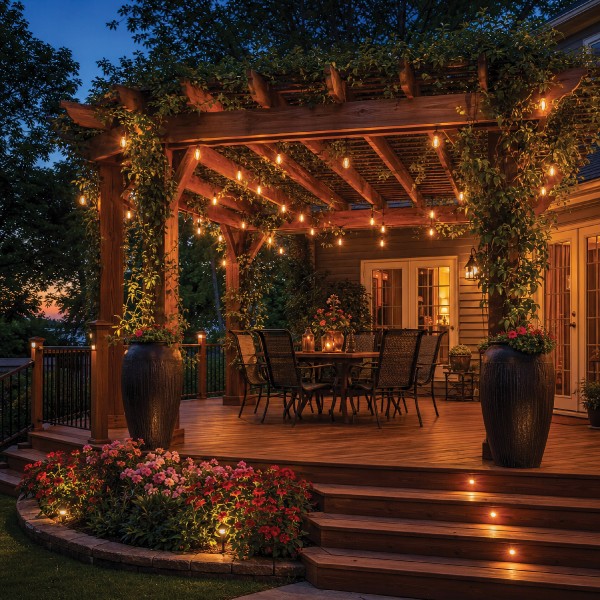 "I would say 90% of the decks we build come with an LED lighting system. ... It's not solar, it's computerized, and it gives a nice glow in the evening that's on the railing, the steps get lit up. Those are very, very important features if you plan on using the deck in the evening hours. It's something we do a lot," says Mike Jerminski, owner of Get Decked.
While lighting is crucial for using a deck in the evening, something that offers shade makes all the difference in being able to enjoy the exterior living during the warmest months of the year as the sun beats down.
"Shade increases usability dramatically, especially in Pennsylvania where summers get hot and bright," says Glasner.
Adding a pergola, whether as a built-in, permanent structure or something removable or retractable that can be retired on days it's not needed, is a helpful way to be able to continue comfortably utilizing the deck.
"To accent the deck area and your different usable living space, deck lighting is essential. Deck designs tend to be a little bit more utilitarian and usable, not extravagant shapes, but how you decorate, it can make up for all of that. So I would say lighting is essential. And I would say putting a shaded area like ... a permanent roof is a must," says Bill Wilson, owner of Amazing Decks.
Furniture is another core element of the deck that makes it a practical place to entertain and relax, with deep seating being a popular choice for outdoor sectionals, sofas and love seats.
Outdoor dining tables and seating are also among the most common selections, allowing for shared meals during parties and get-togethers.
Fire tables or pits and storage benches that can both provide seating and hold anything from gardening supplies to sports equipment are also popular for furnishing decks, providing both comfort and functionality.
"Measure the space to see how they can accommodate the seating for the number of people, and how they need to arrange their seating to most comfortably visit with their friends and enjoy their outdoor space," advises Carolyn Hetrick, one of the owners of Hetrick Gardens.
Bar and lounge areas are also highly sought after, as they give guests a space to interact, hang out and place drinks down while still being able to talk and spend time with the host.
"If you have 50 people over to your house, where do they all hang out? They all hang out with you in the kitchen, everybody hangs out there. And it doesn't matter how big or small the house is, everybody hangs out in the kitchen. So you better put a little bar area where people can sit around with their stools, because they're going to want to hang out with you, even though you have a little bit of work to do. You're really missing out on the space and the usability of the space, if you don't consider putting a little bar top area with bar stools, a place to eat, place to put an order so people can be with you while you grill," says Wilson.
Planters, garden features and other greenery add a chance for homeowners to further personalize their decks, as well as expanding available gardening space for those who enjoy the hobby.
Some garden features are more regulated in certain municipalities around the region, with built-in planter boxes not being allowed in some places due to different building codes.
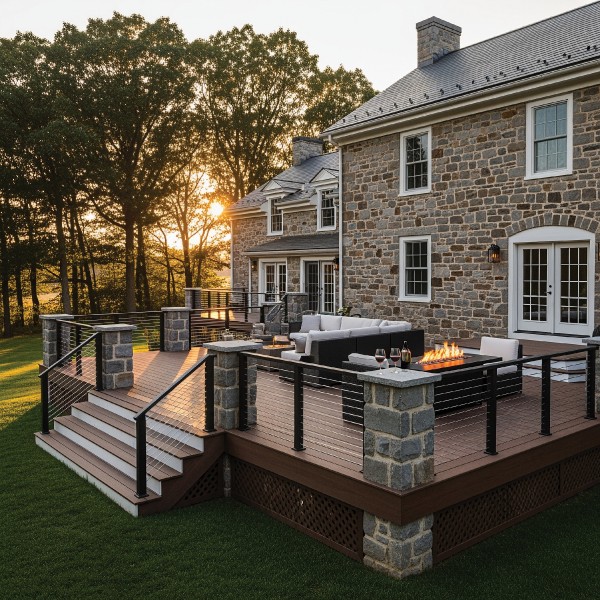 "The codes have gotten pretty strict about those nowadays. Children can actually climb up on a built-in bench or on a planner box. ... So ... if we do a bench, it's a movable bench. Same thing with a planter where the homeowner can move around, but you can't build them nowadays," explains Jerminski.
As built-in planters aren't always an option, Hetrick Gardens sells plants that can be potted and placed on the deck, as well as plant shelves that can help customize the arrangement of the pots. Vertical gardens and railing planters are another option as well.
Other ways to customize and enhance the comfort of the space include heaters, ceiling fans if roofing is available, a weatherproof TV and speakers, and under-deck drainage systems.
As for purely aesthetic enhancements, picture-frame borders, decorative railing infill and accent boards consistently increase satisfaction and long-term value, according to Glasner.
"Keep the design simple and spend your money on your decorating and usability. Usability is how you're going to get your investment back out of the product," Wilson says.
RESOURCES
Amazing Decks
Ambler, Pa.
(215) 654-1886
AnotherAmazingDeck.com
Deck Craft Plus
Honey Brook, Pa.
(610) 273-3317
DeckCraftPlus.com
Dutchies Stoneworks & Outdoor Living
Gap, Pa.
(717) 455-3398
DutchiesStoneworks.com
Get Decked
Chester County, Pa., and New Castle County, Del.
(302) 897-0302
GetDeckedInc.com
Hetrick Gardens
Pottstown, Pa.
(610) 327-9066
HetrickGardens.com
Keystone Outdoor Living
East Earl, Pa. and Keuka Park, N.Y.
(717) 356-3858 and (315) 227-2288
KeystoneCustomDecks.com
Published (and copyrighted) in House & Home, Volume 26, Issue 1 (May/June 2026)
For more info on House & Home magazine, click here.
To subscribe to House & Home magazine, click here.
To advertise in House & Home magazine, call 888-202-5501.